why study medicine in Georgia for international students every year, more than 15,000 new international students choose Georgia to study medicine. That number does not happen by coincidence.
If you are considering medical school abroad and wondering: Is Georgia actually worth it? — this article answers you with real figures and documented facts, not marketing copy.
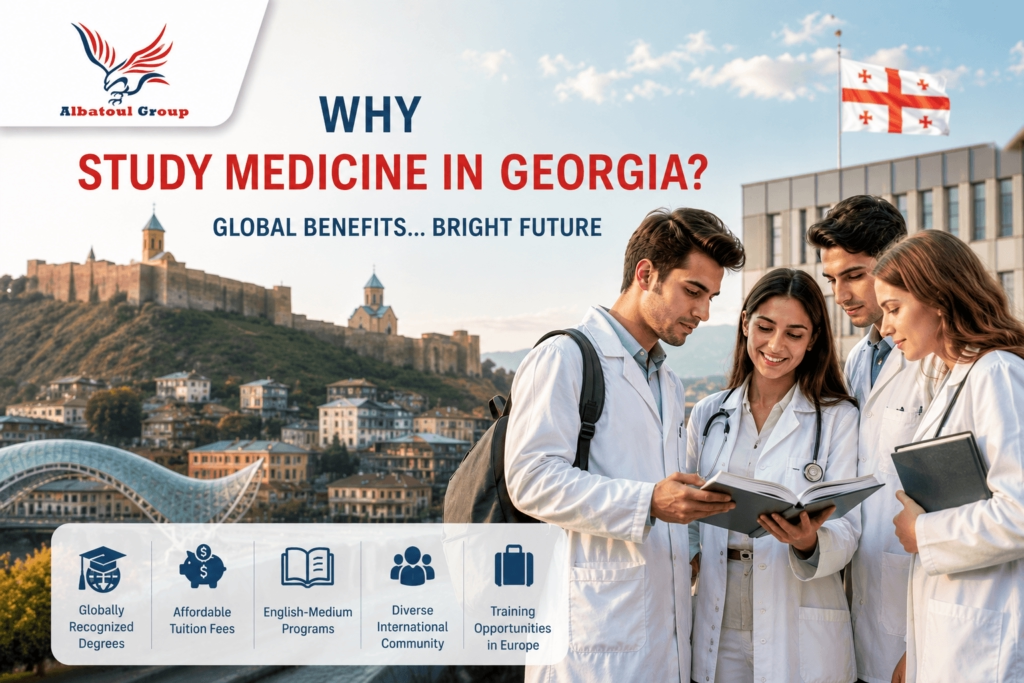
Reason 1: Real International Accreditation That Opens Global Doors
Georgia’s top medical universities hold accreditations found only at the world’s most respected institutions:
- WHO — required to practice medicine in Gulf countries, the Middle East, and most of the world
- WFME — required to sit the US USMLE and British and Canadian licensing exams
- ECFMG/FAIMER — the golden gateway to practicing medicine in the United States
- India NMC — for students intending to practice in India
A graduate of TSMU, for example, can work in the US, UK, Gulf states, and across the Arab world — subject to passing local licensing exams.
Reason 2: Total Cost That Simply Cannot Be Compared
| Destination | Annual Tuition | Monthly Living | 6-Year Total |
|---|---|---|---|
| Georgia | $5,000–$8,500 | $300–$500 | $48,000–$68,000 |
| Romania | $6,000–$9,000 | $600–$800 | $55,000–$85,000 |
| Poland | $9,000–$13,000 | $700–$900 | $85,000–$115,000 |
| Hungary | $10,000–$15,000 | $700–$900 | $90,000–$120,000 |
| Ireland | $28,000–$50,000 | $1,500–$2,000 | $250,000+ |
Georgia saves you between $7,000 and $180,000 over 6 years compared to other destinations with equivalent international accreditation.
Reason 3: Fully English-Medium Education
You do not need to learn Georgian or any other language. Medical programs at major universities such as TSMU, CIU, and New Vision are taught entirely in English — from lectures to exams to textbooks.
This means you start learning from day one without a language barrier, and your degree will be in English — the most widely accepted language in medical licensing exams worldwide.
Reason 4: European-Standard Curricula
Georgian universities follow the European Bologna Process, which means:
- Curricula aligned with European academic standards
- GPA grades recognized internationally
- The option to pursue postgraduate studies in Europe after graduation
- Student exchange partnerships with European universities
Reason 5: Clinical Training in Real Hospitals
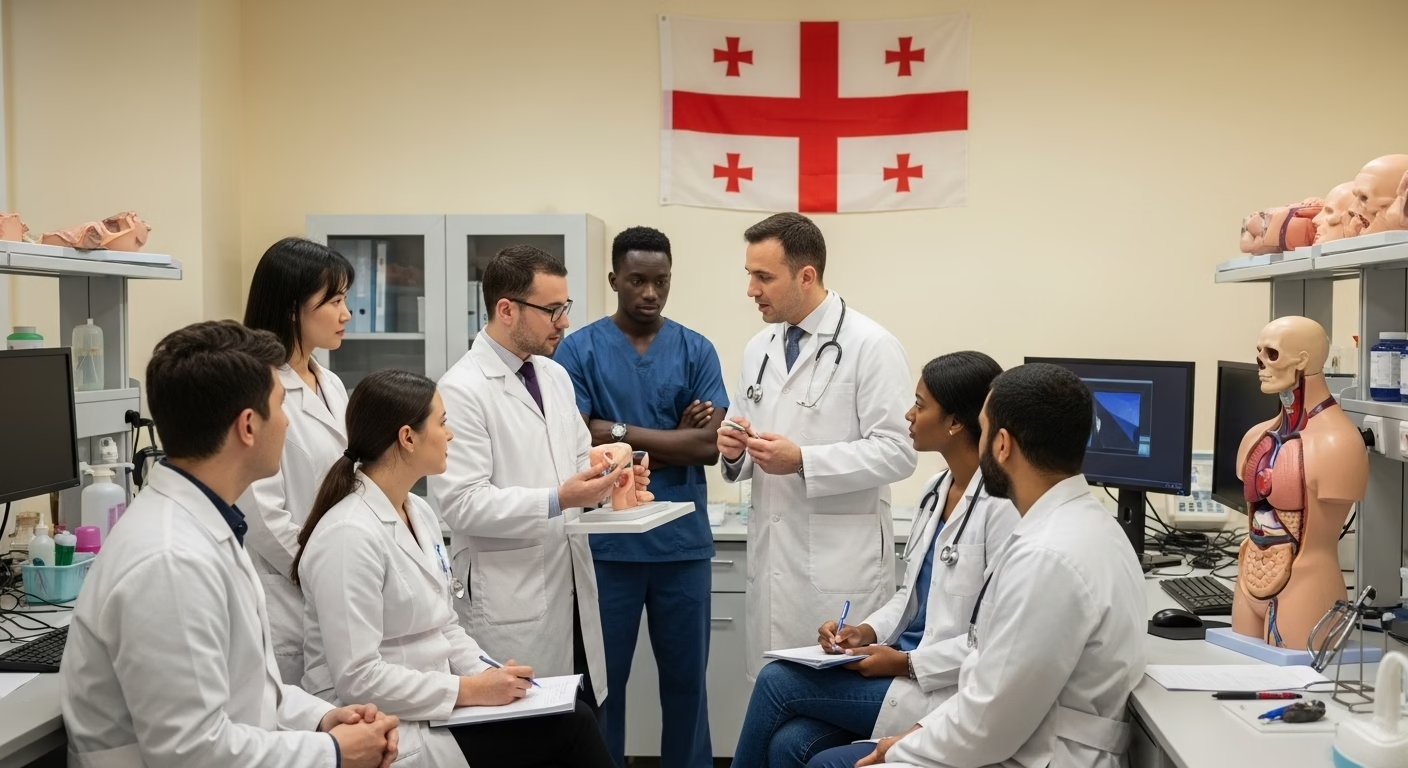
From the third year, you begin clinical training in real teaching hospitals. TSMU, for example, has its own dedicated training hospitals in central Tbilisi, giving you genuine hands-on clinical experience from an early stage — something lacking at many universities in other countries.
Reason 6: Tbilisi — A Safe and Student-Friendly City
Tbilisi is not just a capital — it is consistently ranked among the world’s safest cities according to international safety indices. Living costs are relatively low, the climate is mild for most of the year, and there is a sizeable Arab and Muslim community that makes settling in easier.
Halal restaurants, mosques, and Arab student communities are everywhere.
Reason 7: No Bureaucratic Barriers
No visa for most nationalities — Georgia welcomes citizens of over 100 countries without prior visas or with simplified entry.
No international entrance exams — no SAT, no MCAT, no complex admissions tests at most universities.
No long waiting lists — most universities accept applications year-round and issue decisions within one to three weeks.
Reason 8: Diverse International Student Community
At universities like TSMU and CIU, you will study alongside classmates from India, Nigeria, Ghana, Egypt, Saudi Arabia, Jordan, Yemen, Pakistan, Ukraine, and over 70 other countries. This diversity enriches your human and academic experience and prepares you to work in a truly global medical environment.
Reason 9: You Can Work While You Study
Georgian law allows foreign students to work up to 20 hours per week. Many students work in tutoring, services, or translation to cover part of their personal expenses, reducing the financial burden on their families.
Reason 10: A Clear Pathway From Day One
When you enroll at an internationally recognized Georgian medical university, your path is clear:
6 years of study ← MD degree ← Pass your home country’s licensing exam ← Practice medicine
No ambiguity, no surprises about degree equivalency, no “might be recognized or might not” — choose a WHO-listed university and move forward with confidence.
Are There Downsides? Let’s Be Honest
Yes — life in Georgia is not perfect for everyone:
Some students find the cultural and climate adjustment challenging at first. Tbilisi winters are cold and rainy (December–February). Some smaller universities do not match the standards of the larger ones — which is why choosing the right university is critically important. And professional licensure requires passing additional exams in your home country after graduation — but this applies to graduates of all foreign universities, not Georgia alone.
why study medicine in Georgia for international students Frequently Asked Questions (FAQ)
Is studying medicine in Georgia better than Romania? Living costs in Georgia are noticeably lower. International accreditations are comparable. Both are solid choices, but if budget is a key factor, Georgia is more affordable.
Can I work in Gulf countries after graduating from Georgia? Yes — provided you graduate from a WHO-accredited university and pass the local health authority licensing exams in the country where you want to work.
Is Georgia safe for international students? Georgia is consistently ranked among Europe’s safest countries according to the Global Peace Index.
How long does it take to receive an admission decision? Between one and three weeks at most universities, once all documents have been submitted.
The Decision Is Yours — We Are Here to Make It Easier
The Albatoul Group combines on-the-ground expertise in Tbilisi with deep knowledge of what international students from all nationalities need. From the moment you contact us, we handle everything: university selection, application, documents, visa, reception, and accommodation.
Contact us now — the consultation is completely free.