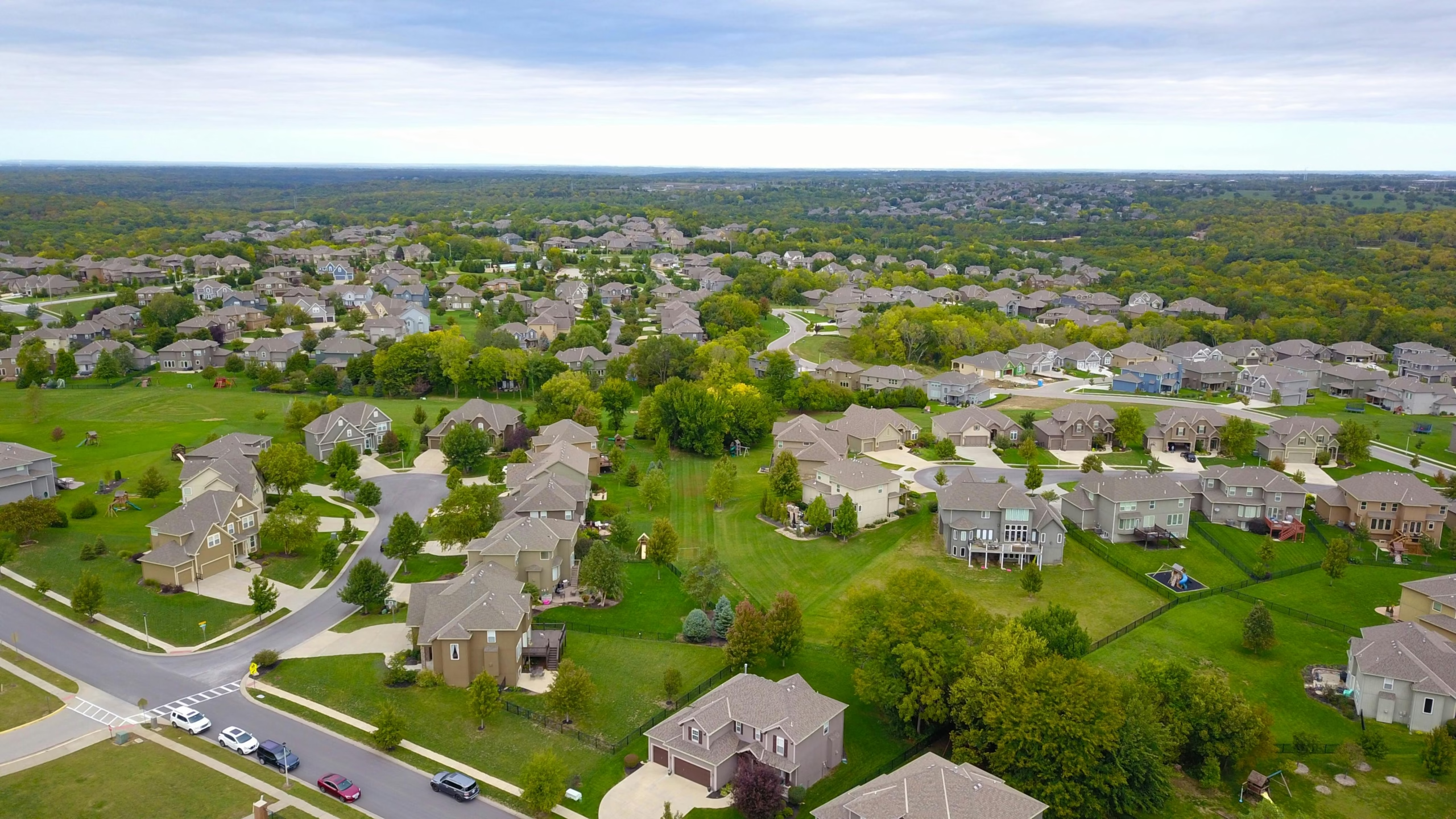
real estate financing for foreigners in Georgia one of the most common questions we get from investors and prospective property buyers interested in Georgia: “I’m not a resident of Georgia — can I actually get a mortgage from a Georgian bank?” The short answer: yes, Georgian law doesn’t prohibit foreigners from obtaining real estate financing from local banks, though the terms differ from those offered to local citizens, and there’s also a very common alternative in the Georgian market — direct installment plans with the developer. This guide breaks down every available option in detail.

Can a Foreigner Get a Mortgage in Georgia?
Yes. Georgian law contains no explicit prohibition on granting mortgages to foreigners, and the largest Georgian banks regularly work with non-residents, most notably:
- TBC Bank
- Bank of Georgia
- Liberty Bank
- Credo Bank
- Basisbank
- Halyk Bank
According to market data, the volume of mortgages issued in the first quarter of 2026 rose by 34% in value and 20% in the number of transactions compared to the same period the previous year — an indicator that banks are genuinely expanding their work with foreign buyers, not just in theory.
Requirements to Get a Mortgage as a Foreigner
Down Payment
This is the biggest difference between you and a local citizen. A Georgian citizen can often get a mortgage with a down payment of just 10-20%, while a foreigner is typically required to put down 30% to 40% of the property’s value. Some banks may lower this to 15-20% if you can prove stable income within Georgia itself for at least 6 months, or if you hold a valid residence permit.
Loan Term
Major banks offer mortgages to foreigners for up to 20 years, though the term is generally longer for loans in Georgian Lari compared to loans in foreign currency (USD or EUR).
Interest Rate
Interest rates in Georgia are floating and tied to a benchmark index depending on the currency:
- TIBR 1M (the Georgian central bank index) for GEL loans
- SOFR for USD loans
- EURIBOR for EUR loans
The rate is typically fixed for the first 5 years, then subject to revision. Actual figures vary significantly between banks, currencies, and client profiles, and different sources cite figures ranging from relatively lower rates for foreign-currency loans to higher rates for GEL loans (reflecting inflation differentials between the currencies). It’s always best to request an up-to-date quote directly from the bank rather than relying on general figures, since rates change frequently.
Maximum Loan Amount
There’s no unified national cap, and each bank sets its own maximum independently. For example, TBC Bank caps loans at roughly $500,000, while Bank of Georgia caps GEL-denominated loans at around 750,000 GEL (which can translate to higher amounts in USD or EUR depending on the exchange rate).
Required Documents
According to sources specialized in Georgian real estate financing, the standard document package required typically includes:
- A valid passport
- Documented proof of income for the last 6-12 months (translated and notarized/apostilled)
- Bank statements
- Proof of the source of down payment funds (particularly for transactions exceeding $50,000, due to mandatory anti-money-laundering checks)
Steps to Getting a Mortgage
- Physically enter Georgia to sign the loan paperwork (some banks accept a formal power of attorney instead of personal attendance, but this isn’t available at every bank).
- Choose the right bank and compare their offers.
- Prepare and submit the required documents.
- Wait for the bank’s approval decision.
- Pay the down payment and sign the purchase agreement.
- Register the property with the government Public Registry — a relatively fast process, usually completed within 1-3 business days.
A Very Common Alternative: Direct Installment Plans With the Developer
Due to the stricter anti-money-laundering procedures and income verification now required for traditional bank mortgages, a large portion of the Georgian market (especially in Batumi) has shifted toward direct installment plans with the property developer — an alternative with entirely different characteristics:
- Term: 12 to 48 months (typically until project completion).
- Down payment: 10% to 30%.
- Interest: Usually 0% (interest-free).
- Required paperwork: Just a passport in most cases, without needing complex income proof or bank approval.
⚠️ The main risk with developer installment plans: the property is only formally registered in your name after the full amount is paid off, not from the start of the contract. Because of this, you need to confirm:
- The developer’s reputation (ideally at least 5 years of experience and at least 3 actually completed projects).
- The existence of a separate escrow account for buyer funds, rather than funds going directly to the developer’s personal account.
A Smart Strategy Used by Experienced Investors
Many investors combine both tools: they take a developer installment plan for one or two years with a modest down payment during the building’s construction phase (which also helps them meet the property ownership threshold for a residence permit at the same time), and once the property is delivered and registered in their name, they apply for a bank mortgage secured by the property itself (refinancing) — getting a lower rate and a longer repayment term of up to 20 years.
Important Legal and Tax Points
- There’s no tax on the property purchase itself in Georgia.
- The annual property ownership tax ranges between 0.05% and 1% of the property’s value, depending on its market value.
- Foreigners are prohibited from owning agricultural land, but this doesn’t affect apartment purchases. If you want to buy a standalone house with land, you’ll need to establish a Georgian limited liability company (LLC), adding an approximate cost of $500-800 and an extra 2-3 weeks to the timeline.
- Transactions exceeding $50,000 are subject to mandatory anti-money-laundering checks, so you’ll need documents clearly showing the source of your funds.
Does Mortgage Financing Affect Residency Through Investment?
Under the amendments effective March 1, 2026, the minimum property value required for a short-term residence permit through property ownership increased from $100,000 to $150,000, while the long-term investment residence permit (up to 5 years, convertible to permanent residency) requires $300,000, confirmed by an independent property valuation.
An important point requiring legal advice: if you purchased the property with a bank loan (meaning it’s still partially mortgaged to the bank), there’s a possibility it could still count toward the residence permit threshold, but this is not automatically guaranteed and needs to be reviewed with a specialized lawyer before relying on it as your core plan.
Frequently Asked Questions About Real Estate Financing for Foreigners in Georgia
Can I get a mortgage in Georgia without being a resident? Yes, most major banks work with non-residents, though the terms are somewhat stricter (higher down payment, closer income scrutiny) compared to residents.
How much down payment does a foreigner need? Typically between 30% and 40% of the property’s value, potentially reduced to 15-20% if you can prove stable income within Georgia for at least 6 months or hold a residence permit.
Is a developer installment plan better than a bank mortgage? Each option has its advantages. A developer installment plan is easier, faster, and usually interest-free, but the property isn’t registered in your name until full payment is complete. A bank mortgage involves a harder process but gives you immediate ownership of the property from the start of the contract.
Can I use a mortgage to qualify for investment residency in Georgia? It’s possible but not automatically guaranteed, and requires direct legal consultation since the regulations are precise on this point.
Is there a tax on buying property in Georgia? There’s no tax on the purchase transaction itself, but there is an annual ownership tax ranging between 0.05% and 1% of the property’s market value.
Deciding on real estate financing in Georgia requires a careful comparison of your available options based on your financial situation. The Al-Batool Group team is ready to help you understand which option fits you best, whether a bank mortgage or a direct developer installment plan.